Faculty of Family Law, Unismuh, Updates Curriculum, Strengthens Expertise in Inheritance and Religious Courts
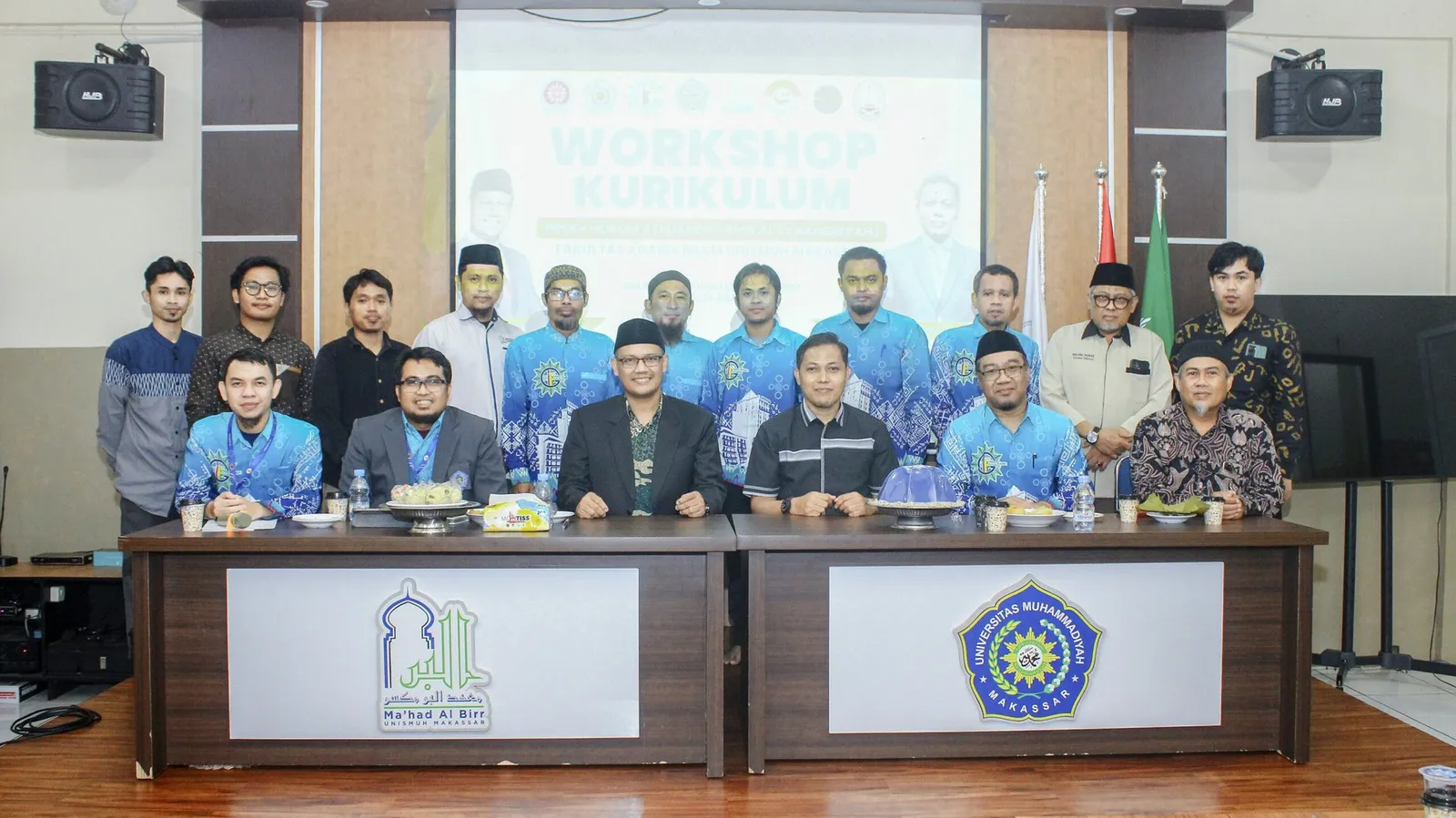
MAKASSAR — The Faculty of Islamic Law (Fakultas Agama Islam) at Muhammadiyah University (Unismuh) Makassar's Family Law (Ahwal Syakhshiyah) Program Study held a Curriculum Workshop in the Syamsuddin Ma'had Al-Birr Auditorium, Unismuh Makassar, on Thursday, July 23, 2026.
The workshop served as a forum for evaluating and updating the curriculum to ensure that learning in the Family Law Program Study remains adaptive to the development of Islamic law, higher education regulations, and the needs of the workforce.
The event was opened by Dr. M Ilham Muchtar, Lc., M.A., Deputy Dean of the Faculty of Islamic Law, representing the Dean.
In his opening remarks, Ilham emphasized that the curriculum is the heart of the program study, as it determines the direction of learning, graduate competencies, and the relevance of education to the needs of society.
According to him, graduates of Family Law should not only master Islamic law theory. They should also possess practical skills, professional ethics, the ability to resolve family law issues, and the ability to adapt to social and work dynamics.
"Through this workshop, the faculty aims to ensure that graduates of the Family Law Program Study have strong knowledge and practical competencies needed in the field," he said.
The workshop was conducted in a participatory manner, involving lecturers, alumni, and students.
The involvement of alumni was aimed at providing input based on their experience in the workplace, including professional challenges and the competencies required by graduates. Meanwhile, students were given the opportunity to express their aspirations regarding the learning process they were undergoing.
Align CPL with OBE
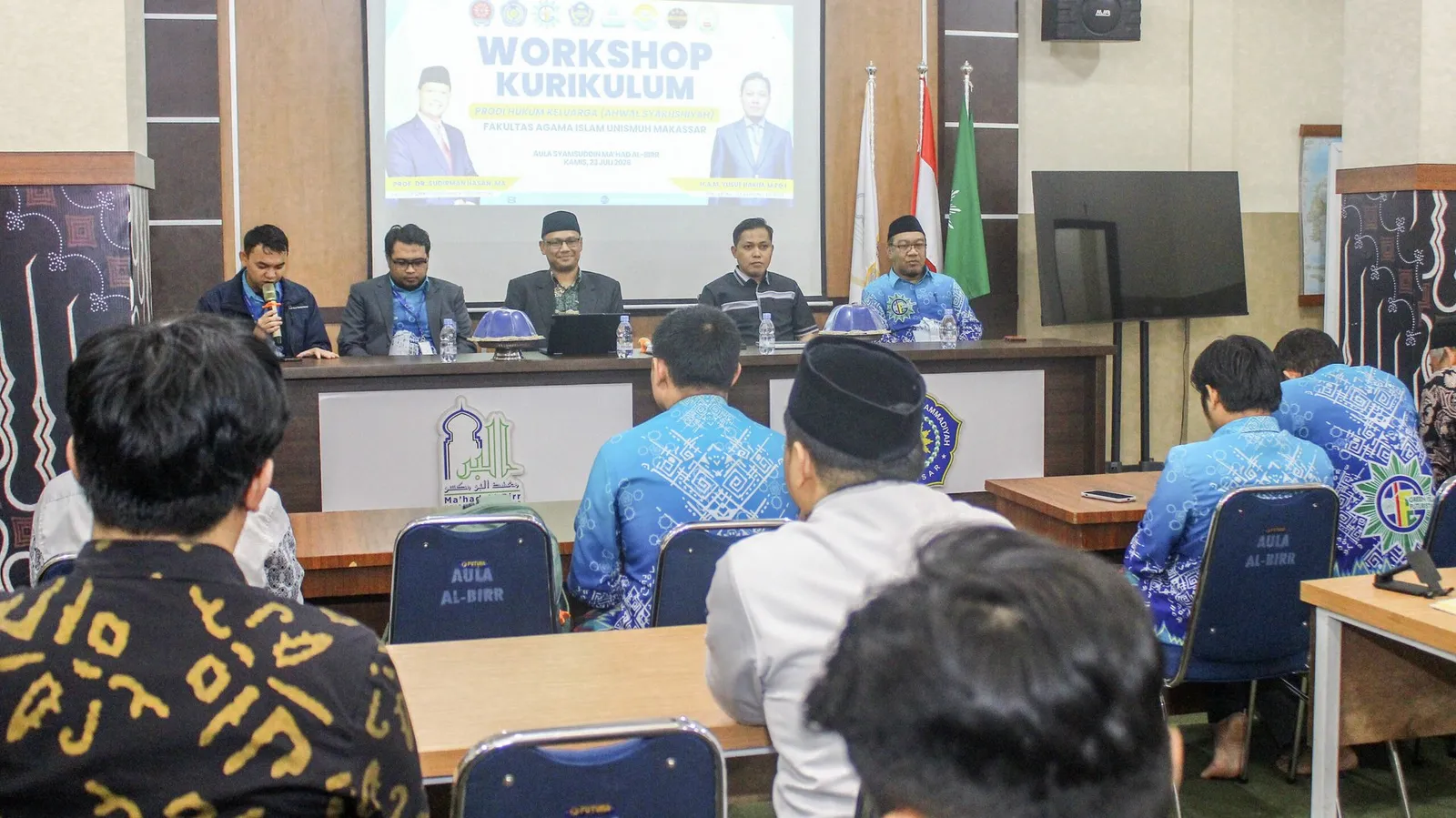
The workshop featured Prof. Dr. Sudirman Hasan, M.A., Chairman II of the Islamic Family Law Association (PDHKI), as one of the speakers.
In his presentation, Sudirman highlighted the importance of strengthening the Ahwal Syakhshiyah knowledge and aligning the Graduate Learning Outcomes (CPL) with Outcome-Based Education (OBE) principles.
This approach places graduate competencies as the primary focus in curriculum design, learning, and evaluation systems.
He also emphasized the need to integrate Islamic values and institutional identity into the curriculum structure. This ensures that graduates not only have academic abilities but also Islamic character, which is a hallmark of education at Unismuh Makassar.
According to him, strengthening the national Family Law curriculum should continue to provide space for institutional specificity while responding to social changes and the development of family law practices.
Strengthen Technical Expertise in Succession
The second speaker, H.A.M. Yusuf Hakim, M.Pd.I., Chairman of the Ethics of Profession at the Central Association of Indonesian Clerics (PP APRI), discussed the need for technical expertise in the field of succession.
He outlined a number of skills that prospective graduates should master, especially related to family law practice, religious services, professional ethics, and institutional needs in the Ministry of Religion and the Religious Court.
Input from practitioners is an important factor to ensure that the Family Law Program Study curriculum does not stop at conceptual learning.
Students should gain learning experiences that bring together Islamic law theory and real-life issues, such as marriage administration, family mediation, legal consultation, professional ethics, and family dispute resolution.
Through this strengthening, graduates are expected to be prepared to pursue careers in various fields, including as clerics, educators, legal administrators, family support, researchers, academics, and other professions related to Islamic family law.
Involve Alumni and Students
The presentation and discussion were guided by Ridwan Malik, S.H.I., M.H.I., Secretary of the Family Law Program Study.
The discussion provided a platform for bringing together the perspectives of academic associations, professional practitioners, lecturers, alumni, and students.
Alumni input provides an overview of the potential gaps between the competencies acquired during studies and job requirements. Meanwhile, students expressed their experiences and needs in the learning process.
The involvement of all parties is expected to produce a curriculum that not only meets national standards but also responds to the needs of graduates.
Dr. Muktashim Billah, Lc., M.A., Head of the Family Law Program Study at Unismuh Makassar, closed the event by thanking the speakers and participants.
He emphasized that the workshop results will be implemented technically in the curriculum development, curriculum mapping, CPL strengthening, and learning model development.
"We are committed to implementing all recommendations to produce a transformative, relevant, and capable curriculum, producing outstanding graduates with Islamic character and competitiveness," he said.
Through this curriculum update, the Family Law Program Study at Unismuh Makassar aims to strengthen the relationship between Islamic knowledge, professional competencies, and societal needs.
The workshop also aims to ensure that every learning process has a clear direction and produces graduates who are capable of providing solutions to various family law issues.
Sustainable Development Goals
Related News
BKPI Unismuh Makassar dan Yala Rajabhat University Jalin Kolaborasi Internasional Riset dan PKM
04 Nov 2025
Kaprodi BKPI Bagikan Tips Menjaga Kesehatan Mental untuk Mahasiswa
10 Oct 2025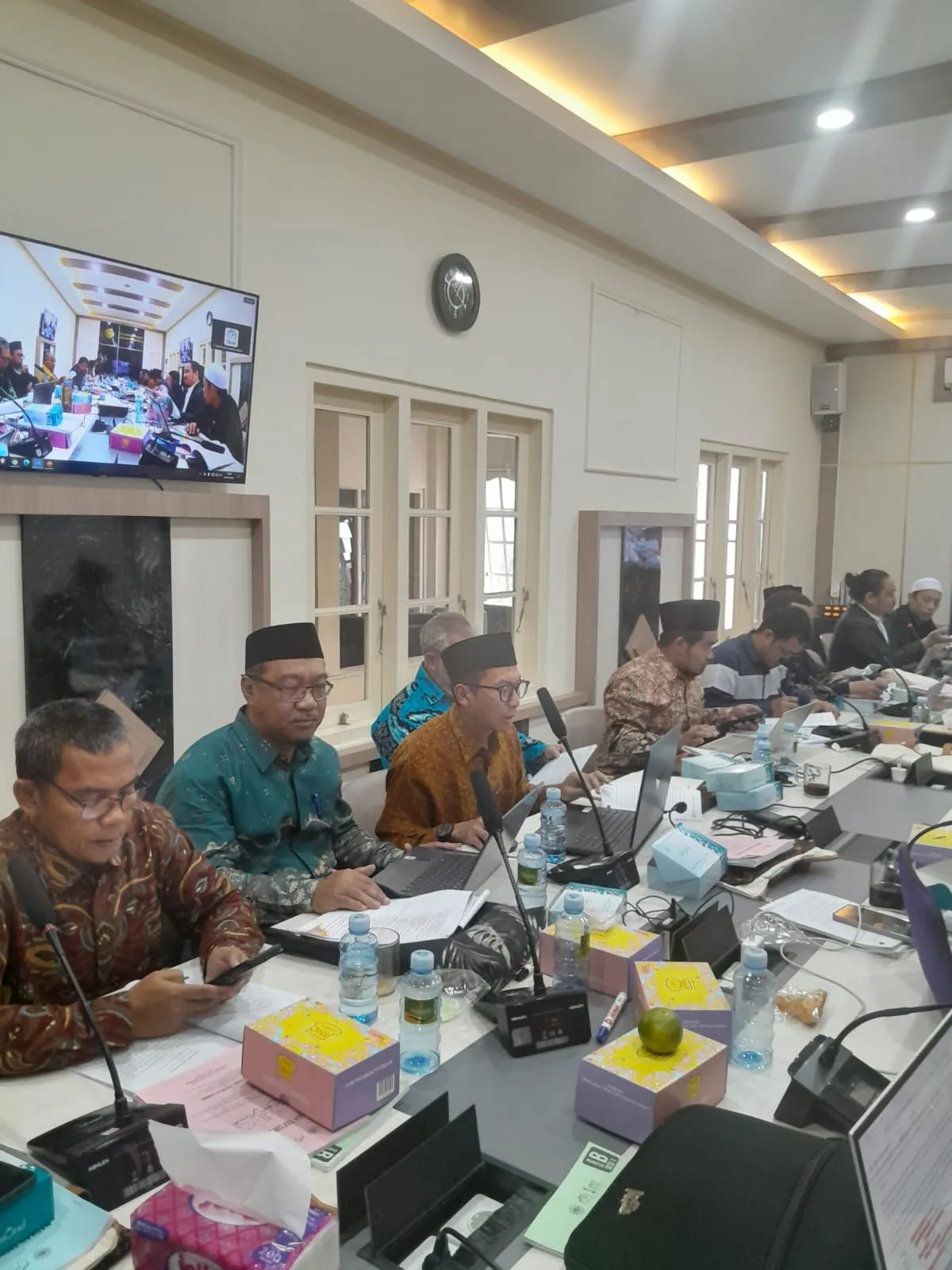
Wakil Dekan 1 FAI Unismuh Bahas Pencerahan Kreatif dalam Halaqah Tafsir At-Tanwir Muhammadiyah
05 Oct 2025